
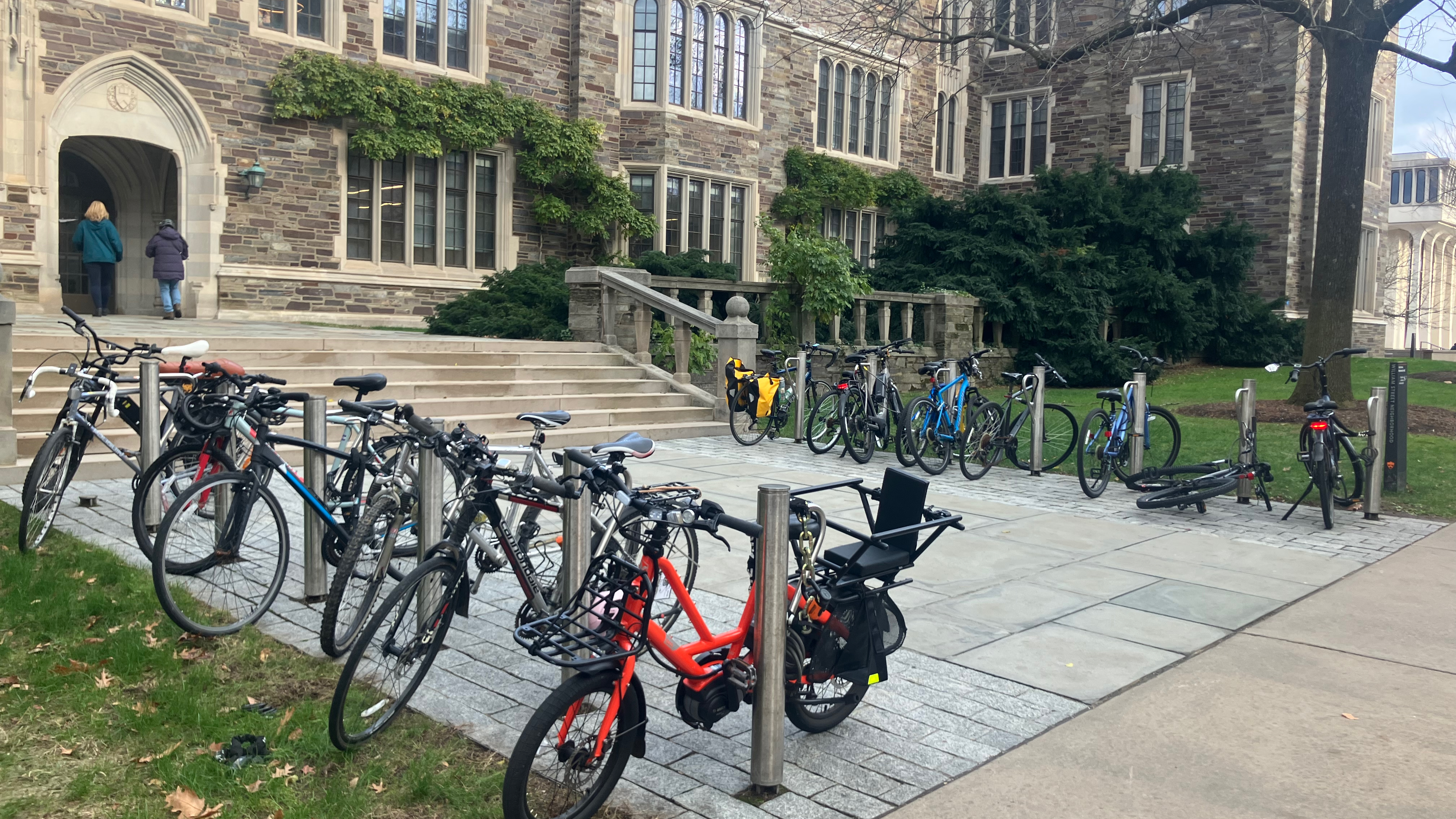
Princeton University announced today that e-bikes are being banned from its campus as of June 1, 2026. The news, which first reported by the Daily Princetonian, comes after a review by University committees that has been ongoing since last year. It will no longer be possible to ride or even park an e-bike in a wide area around the central campus, including several roads that are popular routes for cycling. The ban applies to students, university staff and ‘visitors’ (i.e. people from the town) at all times of the day, and even during vacations when undergraduates are not on campus. It appears that it will also no longer be possible to park an e-bike at the covered bike parking area at the Princeton Dinky rail station.
The University’s statement justified the ban in terms of safety, without specifying how many crashes involving e-bikes and pedestrians have taken place in recent years. No distinction is being made between low-speed e-bikes, which are limited to 20 mph, versus faster ‘e-motos’. By banning e-bikes from campus, the University will potentially be pushing riders onto roads such as Alexander Street and Washington Road, where they will be at increased risk of being struck by cars, buses and trucks. A cyclist was struck by a car driver last September while riding in a bike lane on Washington Road.
Restrictions on e-bikes are potentially useful to support a safe, calm pedestrian experience on the busy paths in the central campus area. But the University’s e-bike ban is much more expansive. Elm Drive, a (mostly) car-free road running north-south through campus, will be covered by the ban. Ivy Lane, a safe route running east-west through the University to the Littlebrook neighborhood, will also be off-limits to e-bikes. Elm Drive is a full-sized road with sidewalks on either side, so it is surprising that the University considers it impossible to safely accommodate e-bikes there. On some parts of campus, it will now be lawful to drive a car but not ride an e-bike.
E-bikes potentially allow more people to get around using a sustainable transportation choice. They are especially favored by older people, people with disabilities, and low-income residents who do not own their own cars. Whereas e-bikes are incentivized in other states, even qualifying for subsidies and tax breaks, New Jersey is increasingly moving toward bans. Earlier this year, the state government passed the strictest restrictions on e-bikes in the USA. These restrictions are opposed by bike/walk advocacy groups, who do not consider them warranted in terms of safety.
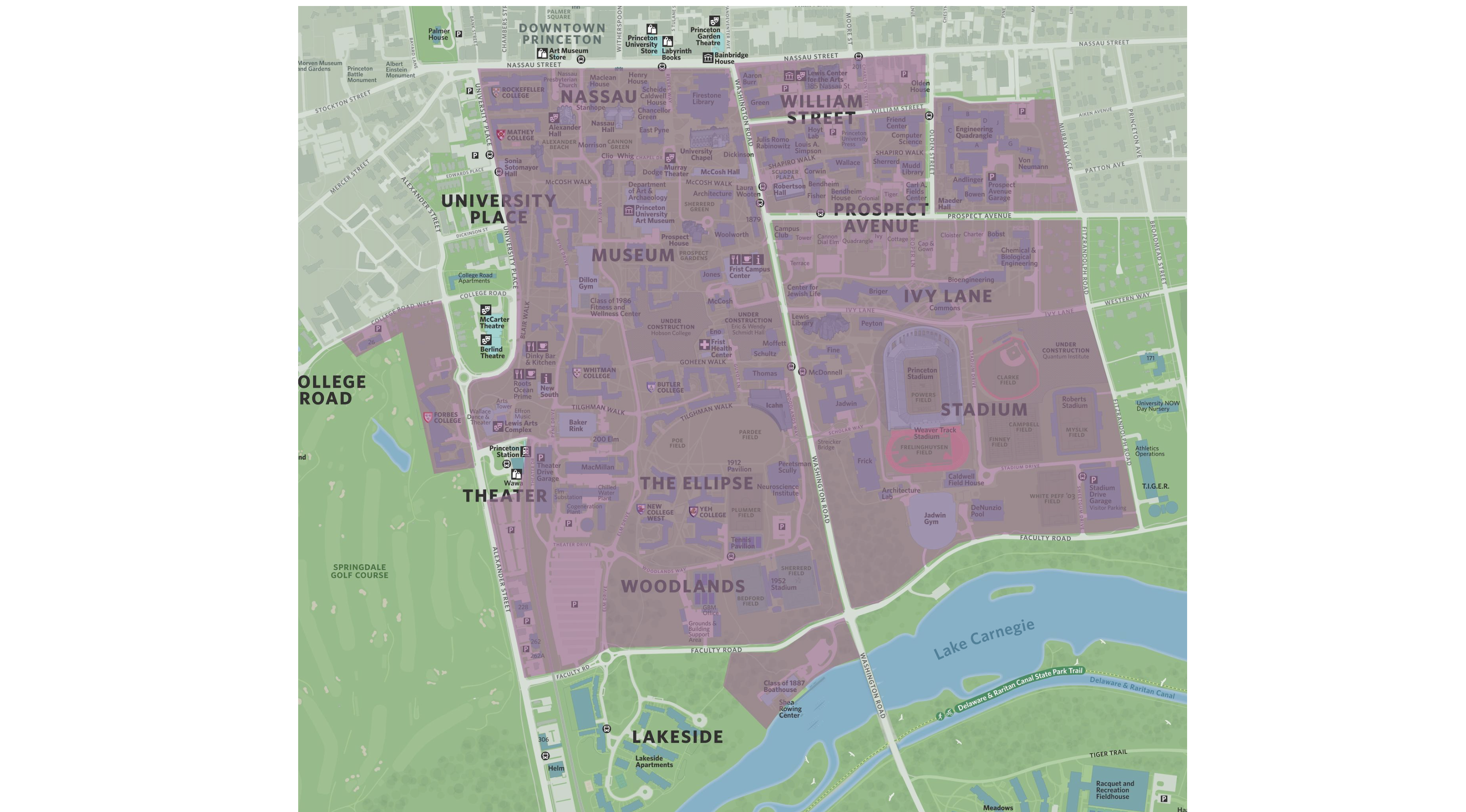
The bike parking area at Princeton Station, the NJ Transit rail station for the ‘Dinky’ train, is also included in the e-bike ban. That means that anyone who parks an e-bike there will risk having their bicycle confiscated by the University. This policy appears to conflict with the Circulation Element of the 2023 Princeton NJ Municipal Master Plan, which had a specific recommendation to “provide adequate public bicycle parking and storage in key locations, including downtown, public facilities, bus stops, parks, and near the Dinky station.”
The Princeton NJ Master Plan further recommended to “provide for safe operation and storage of e-bikes, e-scooters, e-boards, and other micro-mobility devices.” By limiting e-bike parking at a NJ Transit station, the University is making it more difficult for local residents to access transit and to make use of sustainable transportation. Princeton University already made it more difficult to access the Dinky station by shortening the rail line and moving the station further south to accommodate a new Arts campus built in 2014.
It’s not clear if the University consulted with anybody from the town before enacting their e-bike ban. The town of Princeton bans operation of all bikes on certain downtown sidewalks. In September 2023, Princeton Council also considered Ordinance 2023-30, which would have banned operation of e-bikes on all sidewalks and paths throughout the town, but they ultimately decided to table the proposal.
Related links (via Princeton University website):


