A report released on Friday by the New Jersey Department of Community Affairs has set preliminary affordable housing targets for every town in the state for 2025 – 2035. (Link: “2025 to 2035 Affordable Housing Calculations” via nj.gov). The figures were calculated as part of the “Fourth Round” of New Jersey’s fair housing laws, which are called the “Mt Laurel” laws. Locally, the town of Princeton has been given an obligation of 276 units. These new affordable homes must be completed by the year 2035.
Other local communities have been set the following targets for affordable housing for the period of 2025 – 2035:
- West Windsor – 661 units
- Plainsboro – 309 units
- Hopewell Twp – 543 units
- Lawrence Twp – 320 units
Figures for other towns in New Jersey can be found in Appendix 4 of the full report from the NJ Department of Community Affairs, which is linked at the bottom of this page.
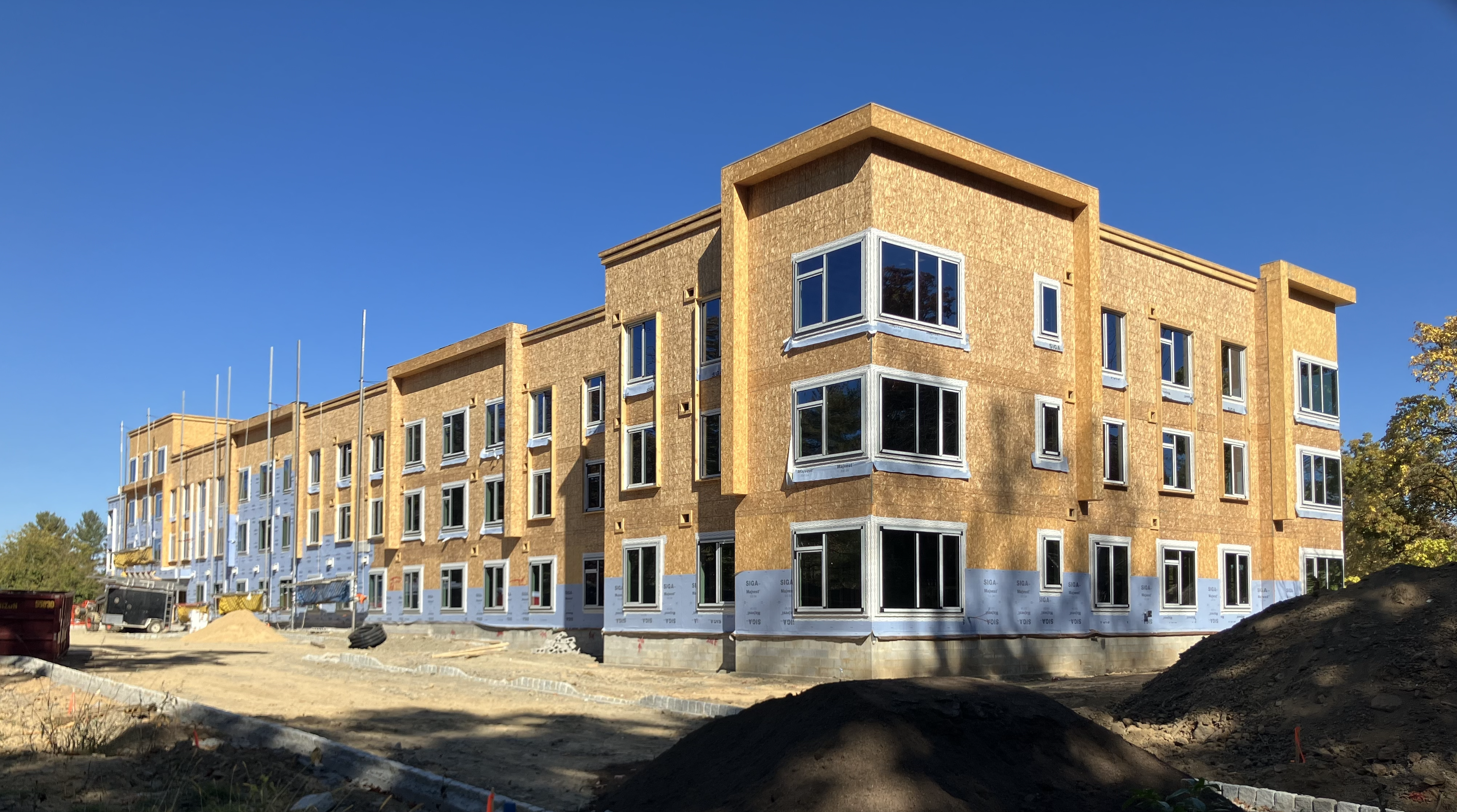
The town of Princeton is still in the process of completing affordable housing required under the ‘Third Round’ of the state’s fair housing process. The ‘Third Round’ covered the period 1999 – 2025. New apartments constructed at Thanet Circle, at the Princeton Shopping Center, and on Mt Lucas Road (see photo at top) are all intended to help the town meet the ‘Third Round’ obligation. The town had to allow a lot of new apartments to meet its 2019 fair housing settlement, because it had not built enough in the preceding years.
Now, the town has a choice of whether to plan for where to put 276 new affordable homes, or whether to challenge the state’s calculations of its housing obligation. This entire process is governed by a state law passed earlier this year (Report: “Town of Princeton has 15 Months to Identify New Affordable Housing Sites, After Murphy Signs Landmark “Fair Share” Legislation“). If the town wants to challenge its designated affordable housing target, it must do so by February 2025. Otherwise, the town has until the end of June 2025 to identify sites for the new affordable housing. In practice the town may not have to build as many as 276 affordable units, because ‘credits’ are available for various reasons, such as placing new homes near transit routes. These ‘credits’ can reduce the total number of homes to be built.
The calculation of Fourth Round housing targets by the NJ Department of Community Affairs are intended to replace the process for the previous round, where each town’s obligation was set by a court process. Many towns had complained that the court process was costly and uncertain. Instead of a “one size fits all” approach, the calculations factor in a number of different circumstances in different towns, like the size of the town, the population, and the amount of available land. No town can get an affordable housing obligation of more than 1,000 units for the Fourth Round.
The new affordable housing targets have been met with outrage by mayors in a number of other towns, although there has been no response from Princeton elected officials so far. At least 20 towns are suing to try to invalidate the state’s fair housing process. However, the recent example of South Brunswick would suggest that this legal strategy may not help them very much. After years of fighting its affordable housing obligation through the courts, South Brunswick recently agreed a settlement with an obligation for 2,000 affordable housing units, the maximum number possible under state law. In general, if towns refuse to build state-required affordable housing, developers can get a court order to be allowed to build regardless of local zoning requirements.
Related links (via nj.gov):
- Report from NJ Department of Community Affairs with Calculations of Fourth Round affordable housing numbers. (see Appendix 4 for numbers for each town)


 walkableprinceton
Princeton did not “have” to allow a lot of apartments in order to meet the last round of affordable housing requirements. The town could have instead chosen to build 100% affordable homes (like the new building at Princeton Community Village and the apartments under construction at the corner of Mt. Lucas and Herronton roads). After all, the town owns two vacant fire station properties, a vacant EMT property, and an underused municipal building on Stockton Street, just waiting to be repurposed. Not to mention the elephant in town…the vacant former high school on Witherspoon St. It’s something to remember going forward with plans for the current round of affordable housing. Betty Wolfe