
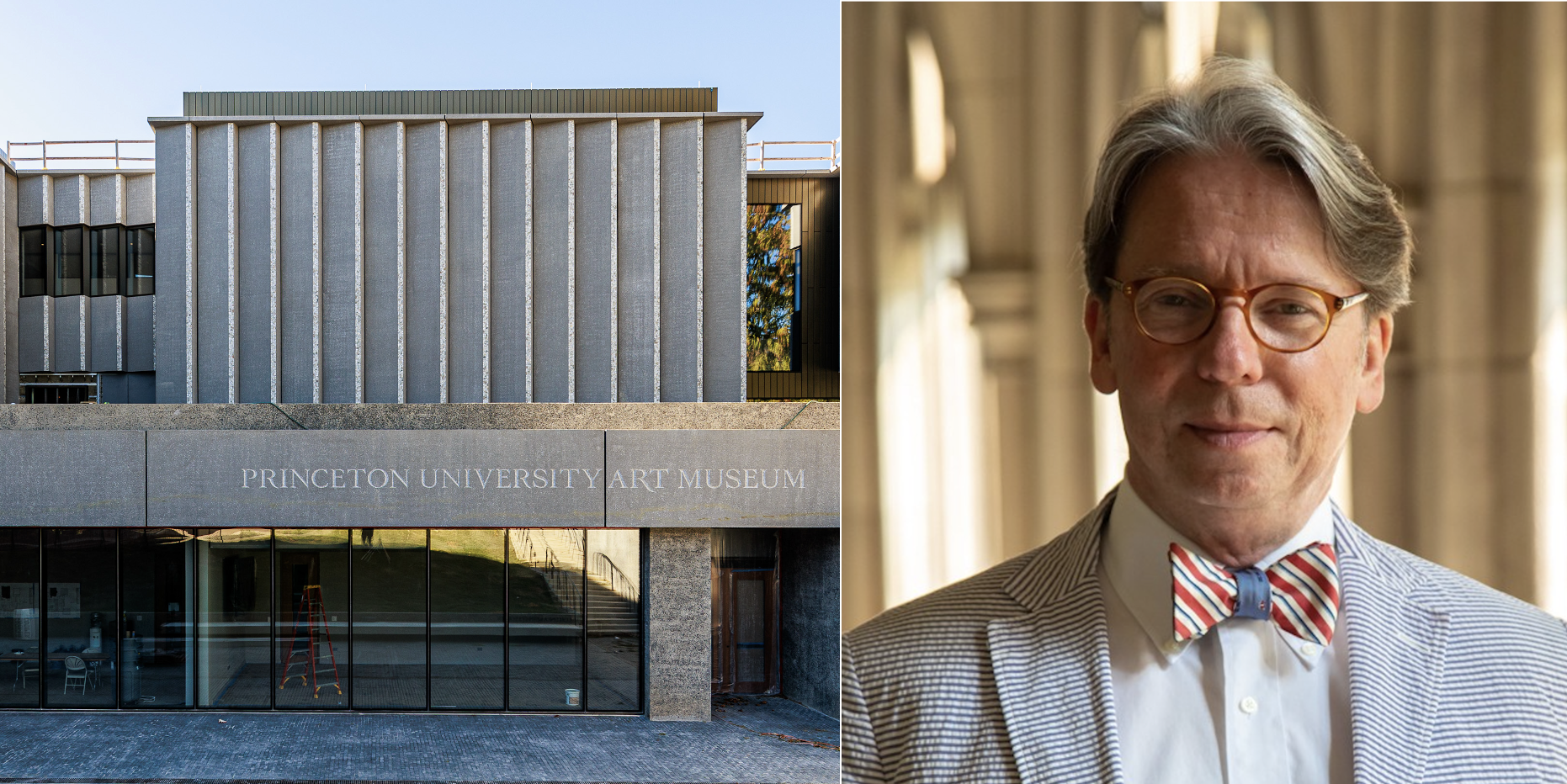
The director of the Princeton University Art Museum, James Steward, has overseen the construction of a magnificent new building, which will open later this month (report: New Princeton University Art Museum To Open 10/31/25 With 24-Hour Celebration). But Mr. Steward has nonetheless found the time to weigh in on a local dispute about affordable housing. As reported in ‘Tap Into Princeton’, Mr. Steward posted a series of remarks last Thursday on Facebook, disputing the value of a proposed mixed-income housing complex. The new housing is planned as part of the town’s state-mandated fair housing plan. The remarks drew some heated comments from local elected officials, who have worked for years to try to increase the supply of affordable housing in Princeton.
The proposed apartment complex at 108 Stockton St (map) would have 238 new homes, 48 of which would be reserved as below-market-rate ‘affordable’ units. A concept plan for the development was unveiled last year. A detailed report, including many pictures of the proposed buildings, was published at the time in ‘Tap Into Princeton’. The architecture is intended to be “contextual”, with “stone and stucco siding and architectural details such as archways, bay windows, gables, dormers, and similar architectural focal points to give the project a sense of place.” The concept plan was greeted with mostly favorable reviews in the town. Michael Floyd, a member of the Princeton Zoning Board, called it “a much more attractive plan than I expected”.
Not everyone likes the plan, of course. A number of local objectors have sued the town and the Planning Board to try to stop it from being built. Many of these people also objected to a prior plan from the Princeton Theological Seminary to use the site as housing for their students. The objectors have expanded their litigation to challenge the entire Master Plan for the town of Princeton, and also the town’s Fourth Round affordable housing plan. Some of the litigation has been dismissed, but the case has dragged on, costing local taxpayers tens of thousands of dollars in legal fees.
Princeton Council member Michelle Pirone Lambros wrote an open letter last week defending the design of the proposed apartments, and saying they would “allow people from different economic backgrounds to live together”. Council member Leticia Fraga shared a link to the letter on her personal Facebook page, which is where James Steward decided to intervene. “Let’s not act like this project is at its heart about the diversity of our community,” he posted, “To claim that this particular architectural design somehow reflects the neo-Gothic character of part of our town and campus is also to misread its design, which many find, well, banal.”
The word “banal” means “lacking originality, freshness, or novelty; trite”. Council members Mia Sacks, Leticia Fraga, and Leighton Newlin were not impressed, and responded by pointing out that Princeton University did not help with the town’s recent efforts to create an updated affordable housing plan. The exchange became sufficiently heated that Mr. Steward accused Council Member Sacks of disregarding the value of art, and “demonizing my values”. He did not mention any affordable housing projects that he liked better, nor did he dispute the point that Princeton University has done little in recent years to help with affordable housing. With its endowment of over $30 billion, the University operates programs to assist its own faculty and staff in buying homes. These programs contribute to inflation in the local housing market, and make it harder for other residents to find a place to live.
Although James Steward doesn’t like the town’s proposals for affordable housing, he is very pleased with the new Princeton University Art Museum, which he has called “a town square for the arts and humanities“. The building has been under planning and construction since at least 2018, and is estimated to have cost hundreds of millions of dollars. On the inside, it will be have expansive galleries, ‘creativity labs’ and the most outstanding fittings that donations from wealthy individuals and foundations can provide. But from the exterior, it appears as a squat, poured-concrete edifice, extending over a huge area in the central part of the University campus, which is decidedly not to everybody’s taste…
“Incredibly ugly” said one online commenter, about the new Art Museum. “Ugly. It will be ugly. The drawings look like giant shipping containers,” said another. Also: “The building is hideous. There is no getting around it.” Other reviews were kinder. An article in the ‘New York Times’ celebrated that the new Princeton Art Museum “returns the muscularity of Brutalist architecture to the heart of the university campus after an absence of more than five decades.” Perhaps James Steward would be happier if the design for the new affordable housing on Stockton Street had more Brutalism? That is certainly something that could be discussed with local residents.
Another issue with the new Art Museum relates to the lead architect, Sir David Adjaye. Around the time he was working on the new Princeton University Art Museum, Adjaye is alleged to have engaged in repeated acts of sexual assault and harassment against women in his practice. Several of the women, who are Black, were allegedly also targeted with racial insults. These allegations led to Adjaye being fired from a number of major projects. It’s not clear that Princeton University ever fired him, however. When the allegations were first aired in 2020, James Steward, who was pictured working with Adjaye, said that he found the allegations troubling but that “most of” the work with Adjaye was already completed. The project still features on the ‘Adjaye Associates’ website.
Princeton Council will meet in closed session on Tuesday. One of the items on the agenda will be the ongoing litigation regarding affordable housing at 108 Stockton St.
Related materials:


 walkableprinceton