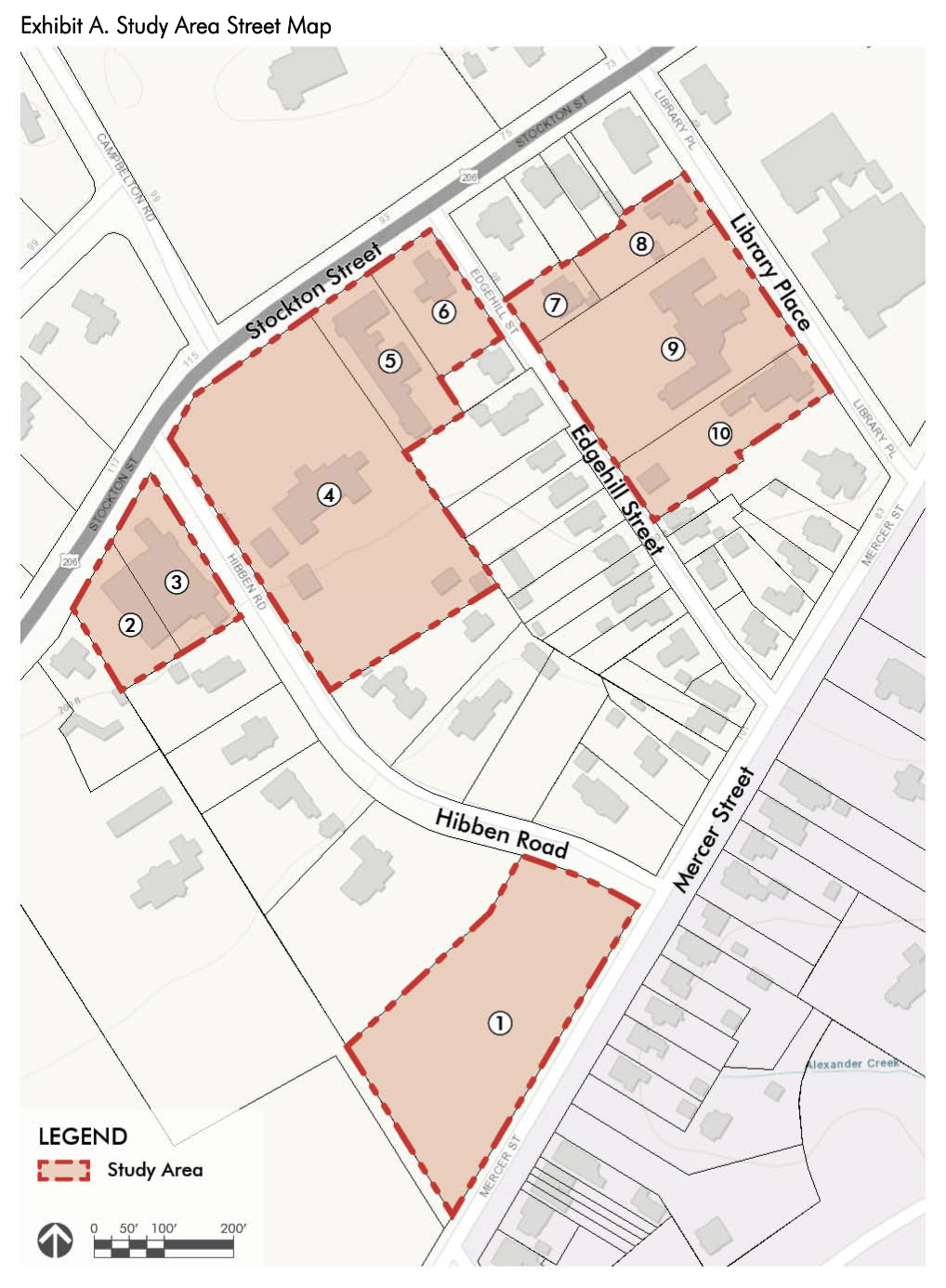
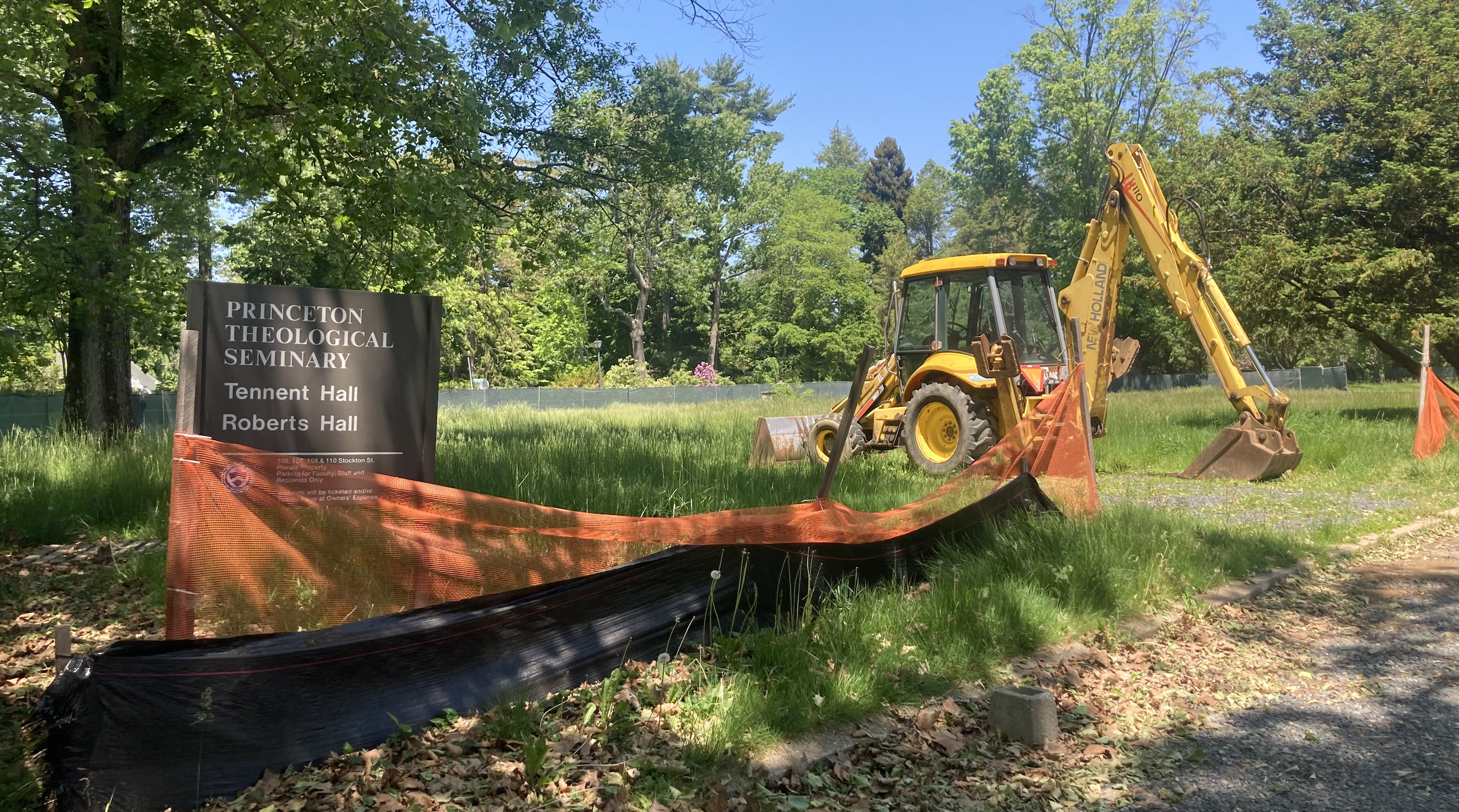
In a classic example of “speak softly, but carry a big stick”, the would-be developer of the former Princeton Seminary Tennent-Roberts site off Route 206 has laid down a threat to neighbors who have blocked previous efforts for redevelopment: if they can’t cut a deal about what to build, they may sue the town. And they think they will win. The case involves 10 acres of land that was designated as a redevelopment area by Princeton Council in 2018. These acres are off of Stockton Street (aka State Road 206) around Library Place, Edgehill Street, and Hibben Road (map). The land is about 10 minutes walk from downtown Princeton, making it an extremely attractive area for “Smart Growth” redevelopment.
A previous plan by the Princeton Theological Seminary to redevelop these acres ended in acrimony in 2019. The Seminary had hoped to build housing for their students on the site, so that those students could live within walking distance of campus, instead of in various townships outside of Princeton. Despite a large number of meetings with neighbors, it was impossible to strike a compromise for redevelopment that was acceptable to all parties. Councilman David Cohen, who was deeply involved in the negotiations, told the “Town Topics” newspaper that “nothing could be further from the truth” than the way that certain neighboring residents characterized the process.
The Princeton Theological Seminary subsequently entered into a contract to sell the land to a developer, widely understood to be Herring Properties. In a community meeting last month (view video here), representatives of the developer described how they hoped to meet the desires of neighbors. Redevelopment would involve good design, enhanced stormwater mitigations, and tree protection.
However, they also cited a recent case in Madison NJ, where a judge ruled that the availability of additional land could be used to meet a town’s “unmet need” for state-required affordable housing. The former Princeton Borough had a historic ‘unmet need’ for affordable housing, because the former Borough claimed that there was not enough available land to build housing to meet state requirements for low-income housing. The Seminary lands are now available for redevelopment, and could be used to help resolve that unmet need, which means that a developer could apply to the courts to get permission to build, regardless of local land use rules or the concerns of neighbors.
The developer’s position is important, because neighbors are continuing to urge the town to play hardball in negotiations over redevelopment of the Seminary lands. The reality is that if the developer proposes any kind of inclusionary affordable development, the town would be taking a big risk by saying “no”. No specific plan for redevelopment of the Seminary lands has been revealed at this time, but the town will have to decide if it’s worthwhile to take on a potential legal battle if neighbors don’t like what is proposed.
Related materials:
Video of May 6 Public Meeting Concerning Redevelopment of the Seminary Site:


 walkableprinceton