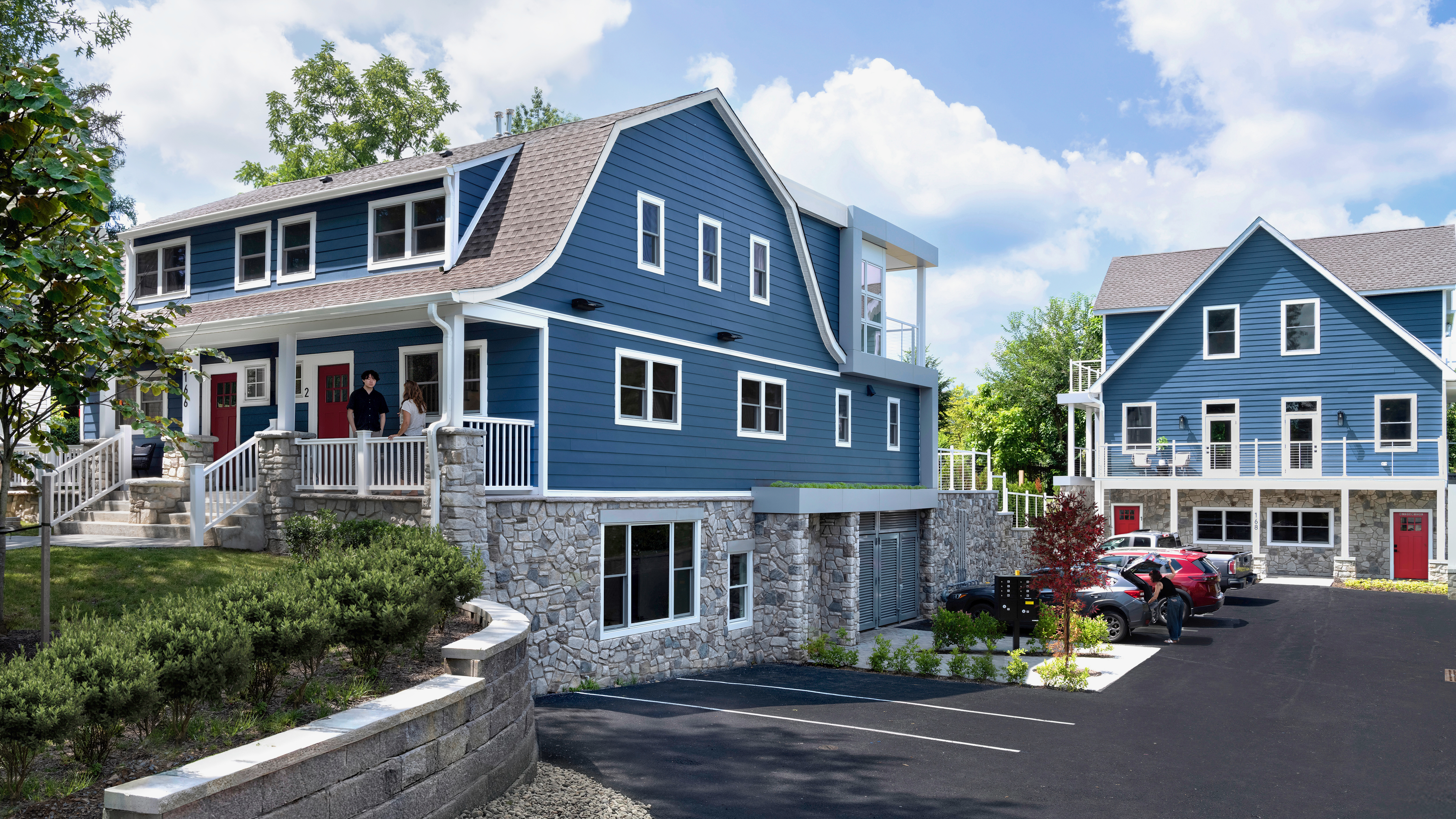
Award-winning local design firm JZA+D have announced the completion of their latest project, a six-unit apartment complex at 166-168 John Street (map). The development adds new homes in a highly-walkable area, close to Princeton University and downtown. The new homes have been a long time coming, however, with the original approval granted in September 2020. At that time, there was substantial opposition to the plan from the Historic Preservation Commission and local neighbors. Even the blue color of the buildings became a significant source of controversy, with historic preservationists arguing that it was an unacceptable color in the Witherspoon-Jackson Historic District.
The 166-168 John Street development involved adaptive re-use of an existing house (the building on the left in the picture above), and construction of a new building in the large side yard. The large side yard was previously the site of a water tower until the late 1990s. The original house has been converted into three apartments. The new building also contains three apartments. In the original plan, there was supposed to be a total of seven apartments, one of which would have been designated as an affordable home for a low-income household.
The Zoning Board held a marathon 4-hour hearing to consider the application. Neighbors who attended the meeting were mostly opposed to the plan, as is customary in Princeton for almost any new construction. The Zoning Board ultimately decided to downsize the proposal from seven to six units. That meant that the proposed affordable home was eliminated, in the interests of greater conformity to zoning laws. All of the six new apartments will therefore be market-rate apartments.
The project had previously been considered by the Site Plan Review Advisory Board and the Historic Preservation Commission. The Historic Preservation Commission sent a memo to the Zoning Board, presented by the town’s Historic Preservation Officer, Elizabeth Kim. According to the memo, the Historic Preservation Commission “unanimously was not in support of this application”. They objected to the proposed addition to the original house, they objected to the materials, and they said that the color – blue – was “inappropriate” for the neighborhood.
That last objection in particular sparked a lengthy discussion of whether it might be acceptable for the buildings to be blue. Chief architect Joshua Zinder pointed out that an existing house directly across the street from the project zone was blue, so surely blue was historic enough? In fact, he had done a survey of the neighborhood, counting up the number of blue houses, beige houses, green, pink and lilac houses. It turns out that blue is not an uncommon color in the neighborhood. There are multiple blue houses on John Street.
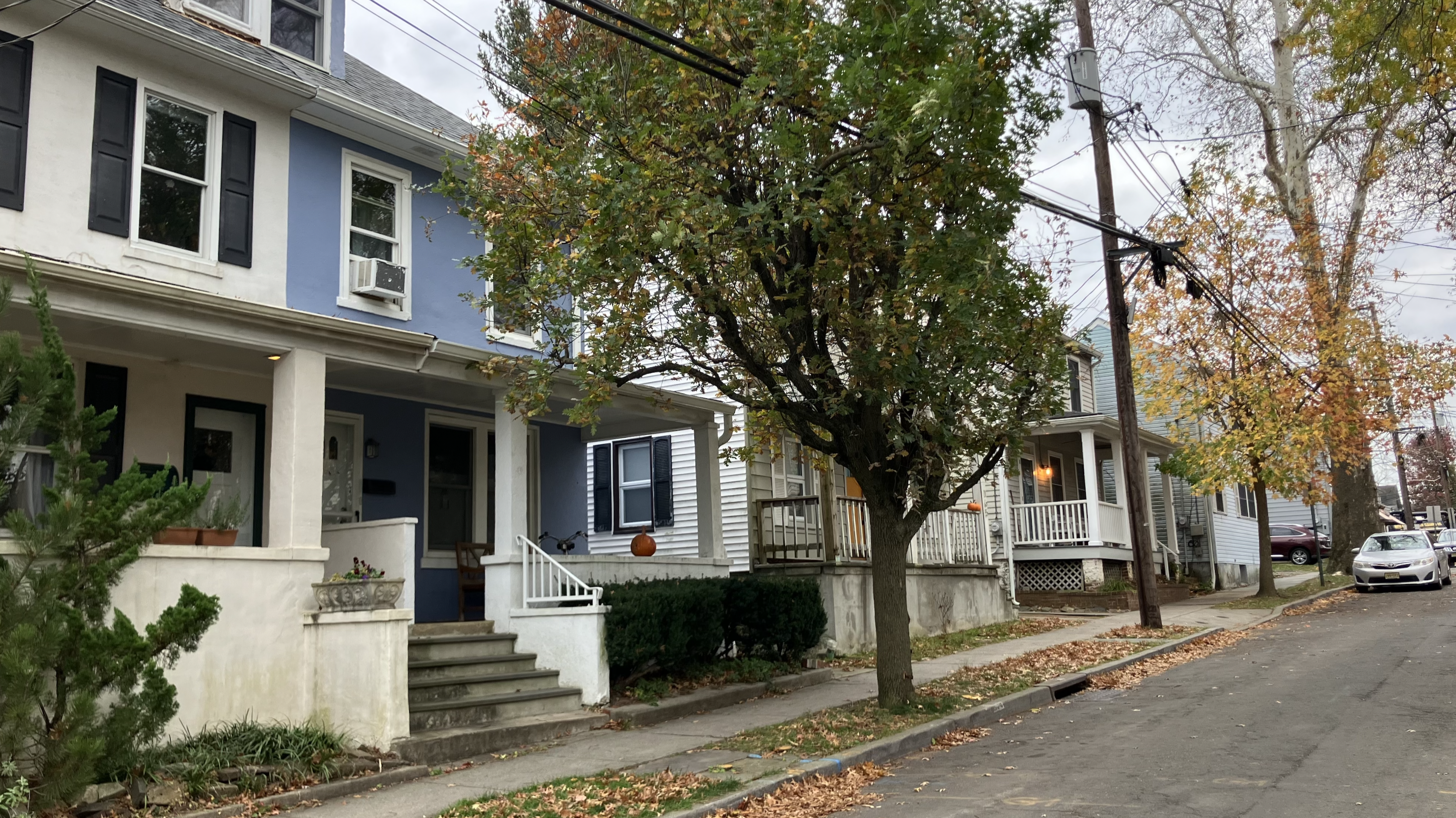
The existence of a blue house or houses, visible to any ordinary person who might walk down the street, was not persuasive to Elizabeth Kim. She insisted that it was the verdict of the Princeton Historic Preservation Commission that blue was not a suitable color. However, the Zoning Board of Adjustment had ultimate authority on whether to approve the application. The members of the Zoning Board were satisfied that, after reducing the number of units and ensuring a good-sized parking lot for cars, the new buildings could actually be blue. And that is how these new homes became blue.
Related materials:


 walkableprinceton